
“Business Forecasting can be conducted by either quantitative modeling methods or qualitative modeling methods.” (OMNSCI. 2020) Quantitative techniques focus on long term forecasting and measure data such as historical and statistical data. Past performance is used to predict or forecast trends or changes. Qualitative techniques on the contrary rely on industry “experts” to make short-term predictions. The qualitative approach is useful when there is not enough data to use in quantitative models.
There is no way to predict the future at 100 percent even with large amounts of data. New techniques involving big data, machine learning, and AI are trying to narrow the gap and increase accuracy. But like the Qualitative technique, sometimes an “expert” can make accurate predictions that come true in the future. One example of a man that made numerous predictions based on his ability to innovate was Steve Jobs. Steve Jobs pursued a vision that he strongly believed was the “future” of computing technology. Here are some of the predictions that Steve Jobs made:
- “We’ll be using a computer at home, for fun.”
- “We will all be connected through the computer.”
- “You may not have to manage your own storage.”
- “People are going to stop going to a lot of stores. And they’re going to buy stuff over the web.”
- “The next stage is going to be computers as ‘agents’.”
(Frost. 2019; Eadicicco & Leswing. 2020)
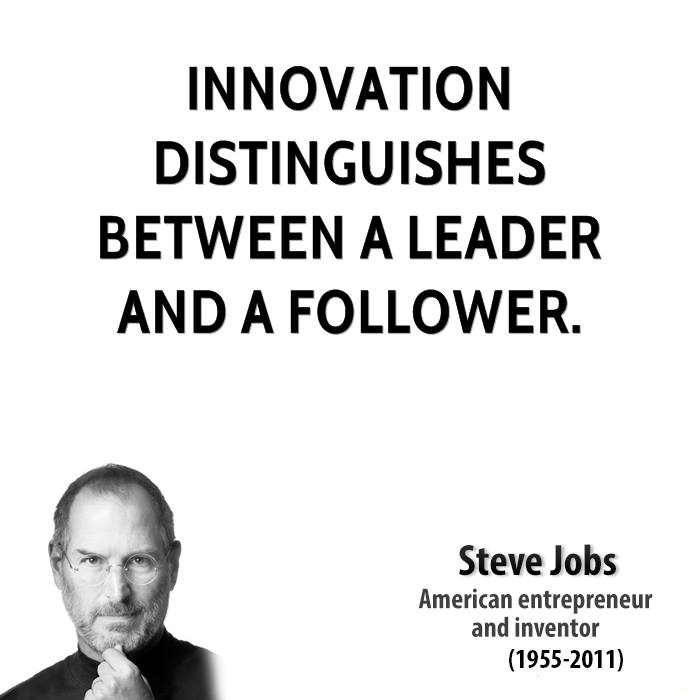
These are just a few of the predictions Steve Jobs made from the launch of Apple up until the late ’90s. Many if not all these predictions have come true. Computers have become the source of connection, especially in a COVID era. Computers have become more than a tool, they have become a source of entertainment, a business driver, a hub for IoT devices. The evolution of computing technology has given us computers that fit in our pockets. A smartphone today has more computing power than a computer a decade ago. Online shopping has risen significantly and poses a huge threat to commercial businesses that rely on in-person shopping. Through a COVID era, companies that had a dominant presence in online commerce, like Amazon or Walmart, had an increase in revenue. This is leading to many companies to quickly adopt online shopping capabilities and increasing online commerce presence.
So, what have been the forces that drove some of Steve Jobs’s predictions? Well simply put it was innovation, competition, and vision. Technology is a very competitive market, if there is no uniqueness or advantages to products consumers might simply not give in or opt for cheaper options. Steve Jobs and Microsoft founder Bill Gates both always tried to 1-up each other once they became the dominant software producers. In terms of hardware, you had a competition between many companies, like HP, DELL, IBM, and Apple to name a few. In our day, these two forces are still driving companies to produce next generation products. But sometimes the impact that an “expert” can have is clear and proves that they themselves are also driving forces and might even be the most important at times.
References
Eadicicco, L., & Leswing, K. (2020, March 12). Steve Jobs made a bunch of predictions in the 80s and 90s about the future of technology — it turns out he nailed it. Business Insider. https://www.businessinsider.com/nine-predictions-about-the-internet-steve-jobs-nailed-20-years-ago-2016-3#that-sounds-very-similar-to-the-way-apples-siri-samsungs-bixby-and-the-google-assistant-work-on-iphones-and-android-phones-today-these-digital-helpers-learn-more-about-you-and-your-habits-the-more-you-use-them-and-surface-contextual-information-before-you-ask-3
Frost, C. (2019, May 26). 10 predictions Steve Jobs made about the future of tech that came true — and 2 he got totally wrong. Business Insider. https://www.businessinsider.com/steve-jobs-predictions-tech-2019-5#but-jobs-didnt-get-every-prediction-right-in-1983-he-said-i-think-there-will-be-lots-of-innovation-in-the-areas-of-software-but-not-in-hardware-11
OMNISCI. (2020, November 6). Business forecasting. Accelerated Analytics Platform | OmniSci. https://omnisci.com/technical-glossary/business-forecasting#:~:text=Business%20forecasting%20refers%20to%20the,based%20on%20these%20informed%20predictions
 Kevin Tepas